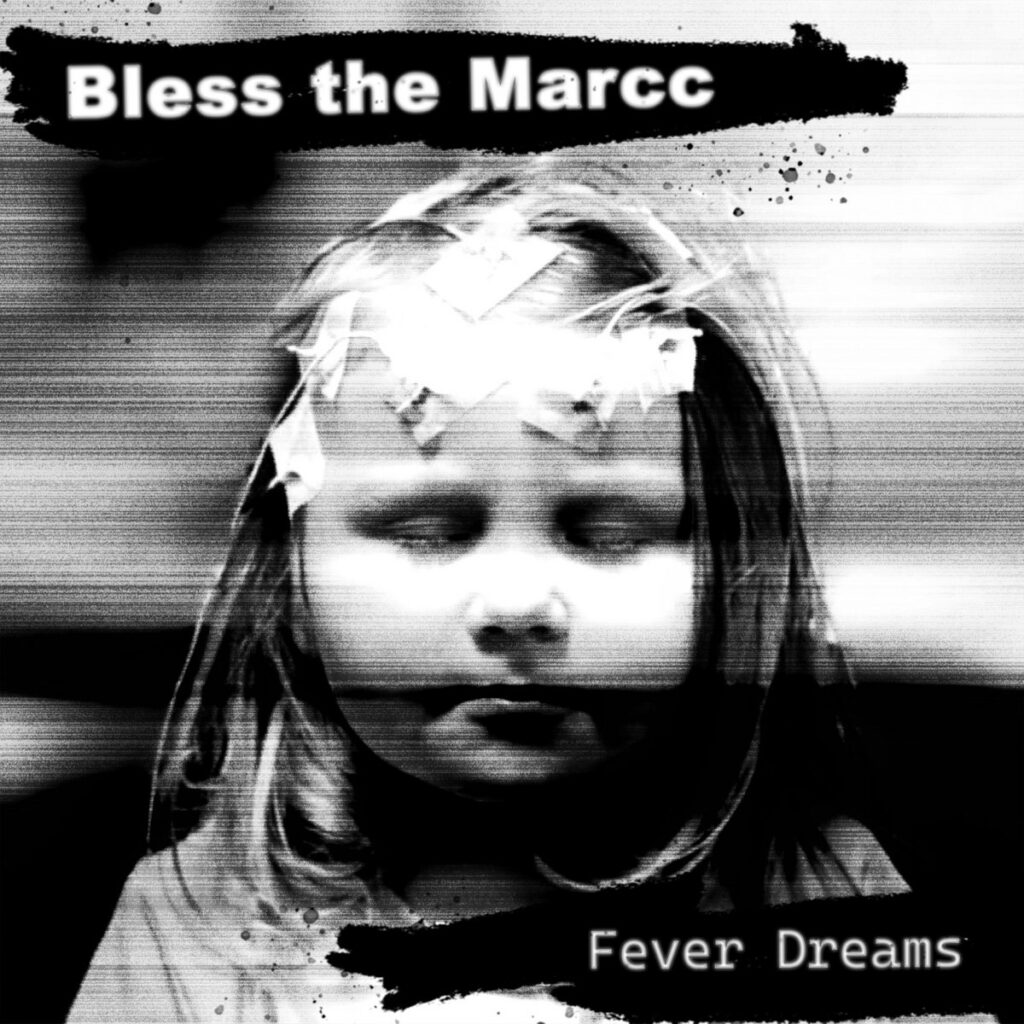
Artist: Bless The Marcc
Release: Fever Dreams
Format: Streaming
Link: Bless The Marcc Bandcamp
With Fever Dreams, Bless The Marcc has created an album that feels like a carefully constructed psychological journey rather than a simple collection of electronic tracks. Sean Higgins’ background in electro is clearly present, with traces of Cybereign and Cybernet 1202 occasionally breaking through the surface, but this release feels like something more inward-looking, surreal, and cinematic. It is dark, thoughtful, anxious, and deeply immersive, an album that deserves to be heard from beginning to end.
From the opening moments of “Crush Flash”, the album establishes a sense of unease. Repetitive, hypnotic pulses suggest heartbeats, passing time, and rising anxiety. This tension becomes one of the central threads of the record, returning in different forms throughout the album. There is a constant feeling that reality is shifting slightly out of place, as if the listener is moving through a half-remembered dream or a distorted memory.
The early part of the album balances contemplation with disorientation. “Dream Walking” brings a reflective, almost Jean-Michel Jarre-like quality in places, while still carrying a darker electro edge through its analogue synth textures and sci-fi atmosphere. Tracks such as “Dava” and “Every Bug” deepen the surreal quality, combining rhythmic movement with detuned, uncanny synth work. At times the album reminds me of the strange atmosphere of the 90s game Weird Dreams, not in a literal sense, but in the way it creates anxiety through oddness, repetition, and dream logic.
As the album develops, darker industrial elements begin to emerge more strongly. “Into Waste” is one of the clearest examples, with haunting electronics and a sense of mechanical decay that hints at Front Line Assembly without ever feeling like imitation. This is where the album’s excellent sound design really stands out. Effects, textures, and synth movements are used thoughtfully, not simply to decorate the tracks, but to build a world that feels unstable, intelligent, and emotionally charged.
There are also moments where Higgins’ earlier identities seem to push through the fabric of the album. “The Door” feels almost like a question being asked, with deep bass and a sense of something trying to break through from another place. “Catching Fire” strengthens that connection, bringing more obvious electro momentum, excellent arpeggios, and a feeling of impending doom. These moments give the album energy and forward motion, but they still sit inside the wider dreamlike structure of the record.
The middle and later sections of Fever Dreams become increasingly concerned with transformation and collapse. Tracks like “Melting” and “Dimension Shift” feel like moments of rupture or deconstruction, as though the album’s reality is tearing open. Then “Flax” offers one of the most striking changes in mood, becoming softer, more reflective, and almost nostalgic. It feels like a memory surfacing, warm but still slightly wrong, with uncanny synths keeping the listener from ever feeling completely safe.
The final stretch brings the darker electro influence back into focus. “Infecting Cells” and “Rage Down” carry a sense of post-apocalyptic dread, cyclic movement, and gathering darkness, before “Pluktard” closes the album with a driving bassline and a surprisingly satisfying, catchy final movement. It ends in the right place, not with a simple resolution, but with the sense that the listener has completed a strange and powerful journey.
What makes Fever Dreams so compelling is the way it holds together as a complete experience. Its recurring cycles, heartbeat-like pulses, warped melodies, and careful use of effects give it a strong internal logic. There are elements of electro, industrial, hauntology, analogue sci-fi sound design and experimental electronics, but they are all shaped into something personal and deliberate.
For me, the album is reminiscent of Haujobb’s NinetyNine, not because it directly copies its sound, but because it creates a complete world of its own. It is the kind of record that asks for proper attention, something to sit with in a comfortable chair, perhaps with a glass of whisky, and absorb from start to finish.
At its best, Fever Dreams feels like pure electronic art. It is experimental without being careless, dark without being one-dimensional, and intelligent without becoming cold. You can hear the time, love, and thought that have gone into the composition, production and sequencing. Bless The Marcc has made something unsettling, thoughtful, and genuinely absorbing, an album that lingers long after it finishes.
Highly recommended.